How we use AI at Your Digital Home
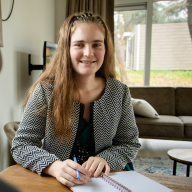
Laura Joe - de Bruine
The non-profit sector is divided on AI. Some use AI enthusiastically and are amazed by the possibilities. Others are concerned about the environment and other ethical objections to AI. Those ethical objections are also the reason the EU AI Act came into being. Since 2 August, the main transparency rules and powers of the EU AI Act have come into force, and organisations are required to ensure AI literacy among staff. That's why we've drawn up an AI policy, which we apply internally and also communicate externally. In this blog post I explain that in somewhat more understandable terms.
Our view on AI: benefits and objections
I studied International Development Studies at Wageningen University and Utrecht University until 2021. Back then there was no AI the way we know it now. I sometimes wish I'd had it — it would have saved me a lot of time. And then I could have spent even more time setting up our foundation, which my Master's thesis was about. I did a lot of manual work, because there wasn't yet a good alternative that I knew of.
At the same time, I hear a lot of objections. A frequently mentioned argument against AI is its environmental impact. On the other hand, the biggest environmental impact has already been made before we as 'consumers' use AI tools like ChatGPT, Gemini and Claude. Ethical objections are also raised. AI, for instance, doesn't represent the Global South well, because most data comes from the Global North. That also makes AI often biased.
These objections are, in my view, valid reasons to use AI carefully. Facts always need to be checked. But what if we don't use AI at all? Then I'm back in 2021, doing a lot manually. AI offers the chance to speed up work and thereby work more efficiently. Where you used to spend hours on a PowerPoint presentation, AI can now produce a quick version in under 5 minutes. We can certainly use that time well in the non-profit sector to help more people.
How do we use AI at Your Digital Home?
We use AI as a tool and never as an editor-in-chief. We use AI for inspiration, brainstorming and first drafts of texts, among other things, but also for inspiration and brainstorming templates and designs for websites, social media and newsletters. That way we avoid starting from a blank page, which saves a lot of time.
Tools like ChatGPT, Gemini, Claude and Granola AI help us explore different directions faster. But a text that comes out of AI is never automatically finished for us. AI can write something convincingly that isn't factually correct. It can miss nuance or choose a tone that doesn't fit an organisation. That's why AI content is always checked and adjusted by a professional. Where possible, a second person reviews it too. Ultimately, we remain responsible for what we deliver.
We don't put an AI label on everything
If AI has been used for inspiration, a first draft or sharpening a text, we don't automatically state that AI was used. For us, the difference lies mainly in responsibility for the end result. If we check, rewrite, improve and approve a text, we see AI as a tool within our creative process — comparable to other software we use to work better or more efficiently.
That doesn't mean we want to hide AI use. On the contrary — that's exactly why we have a public AI policy. When it's relevant to explicitly mention AI use, we certainly do so.
How do we handle this with photos?
For photography we maintain a clear line. Photos we present as images of real people, organisations, projects or events are authentic. AI may be used for technical image editing, for example for:
- light correction;
- colour correction;
- sharpness;
- noise reduction;
- cropping;
- small technical improvements.
But as soon as AI substantively changes reality, it crosses a line for us. We don't, for example, change faces, people, objects or backgrounds and then present the image as an authentic photo. A fully AI-generated photographic image therefore carries the label: Image created using AI
Sensitive information and AI
An important part of our AI policy concerns privacy and confidentiality. Not everything can simply be entered into an AI tool. Public information or information intended for publication can often be used. The same applies to general text, design or tone-of-voice guidelines. We don't enter sensitive information. Think of:
- passwords and login details;
- donor data;
- newsletter subscribers;
- private emails;
- staff information;
- information about children;
- medical data;
- confidential client documents;
- unpublished budgets;
- sensitive personal stories.
Where possible, information can first be anonymised. Privacy always comes before convenience.
AI during meetings
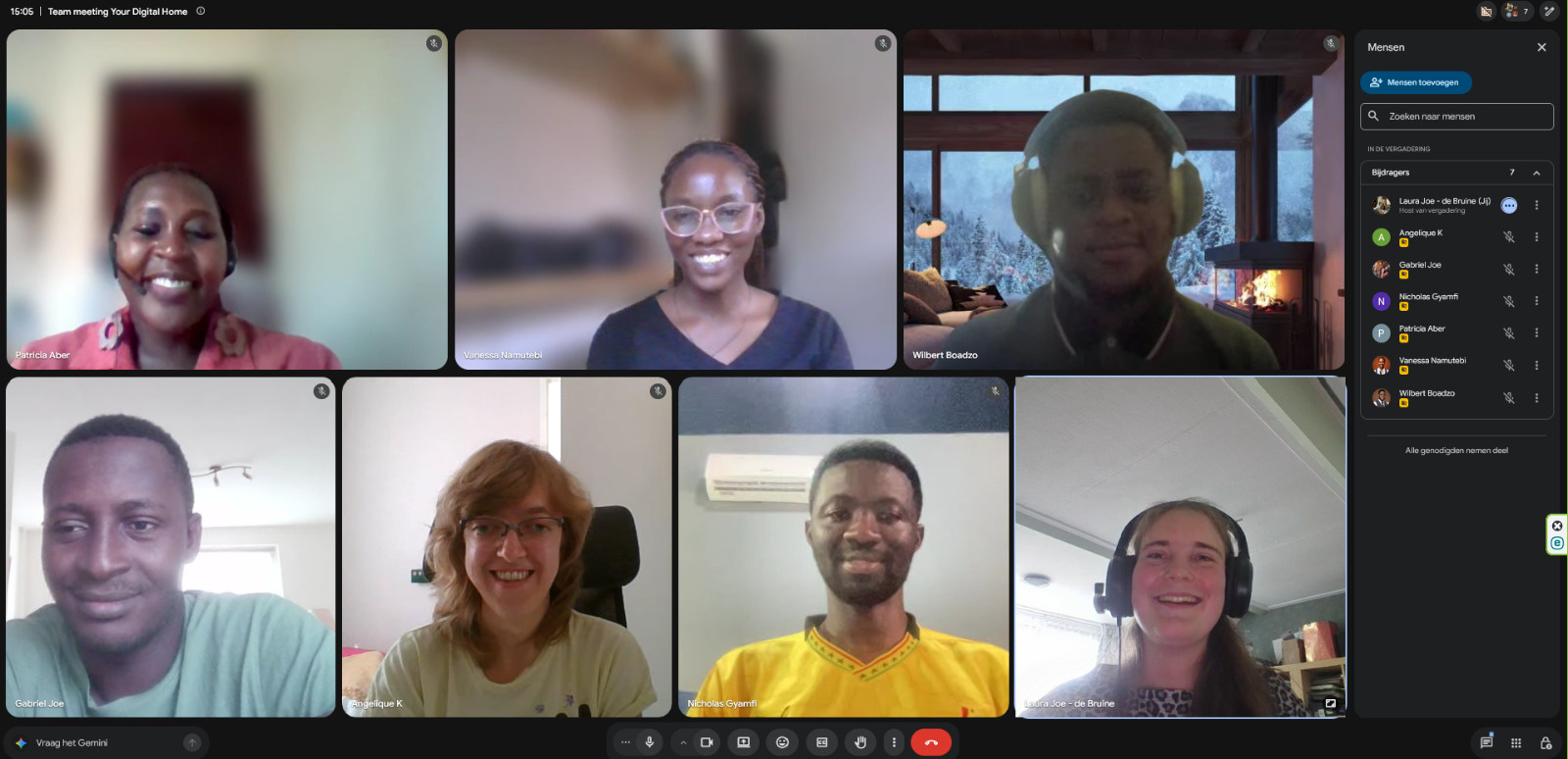
We also use Granola AI to take notes and capture action points during certain meetings. That helps us worry less about minute-taking and pay more attention to the conversation itself. There are conditions attached, though. We strive to inform everyone in the meeting beforehand. The first time, we also explicitly ask for verbal consent.
We don't use Granola when confidential or sensitive information is discussed. Transcripts are also not kept indefinitely. The goal is for AI to support the conversation, but it must never come at the expense of privacy or trust.
A client can also choose no AI
Not every organisation views generative AI the same way. We understand that. That's why a client can indicate that no generative AI may be used within a project. We're happy to take that into account and discuss the consequences for the work. It may affect planning, working method or price. If that's the case, we discuss it beforehand.
Training and AI policy
Good AI tools don't automatically make responsible AI use self-evident. You also need to know the limitations and risks. That's why we completed AI training with Muurling in June 2026. Our AI policy also applies to all professionals working within, for, or on behalf of Your Digital Home. You can read the full AI policy here.